1. Why Trebalúger Remains Untouched
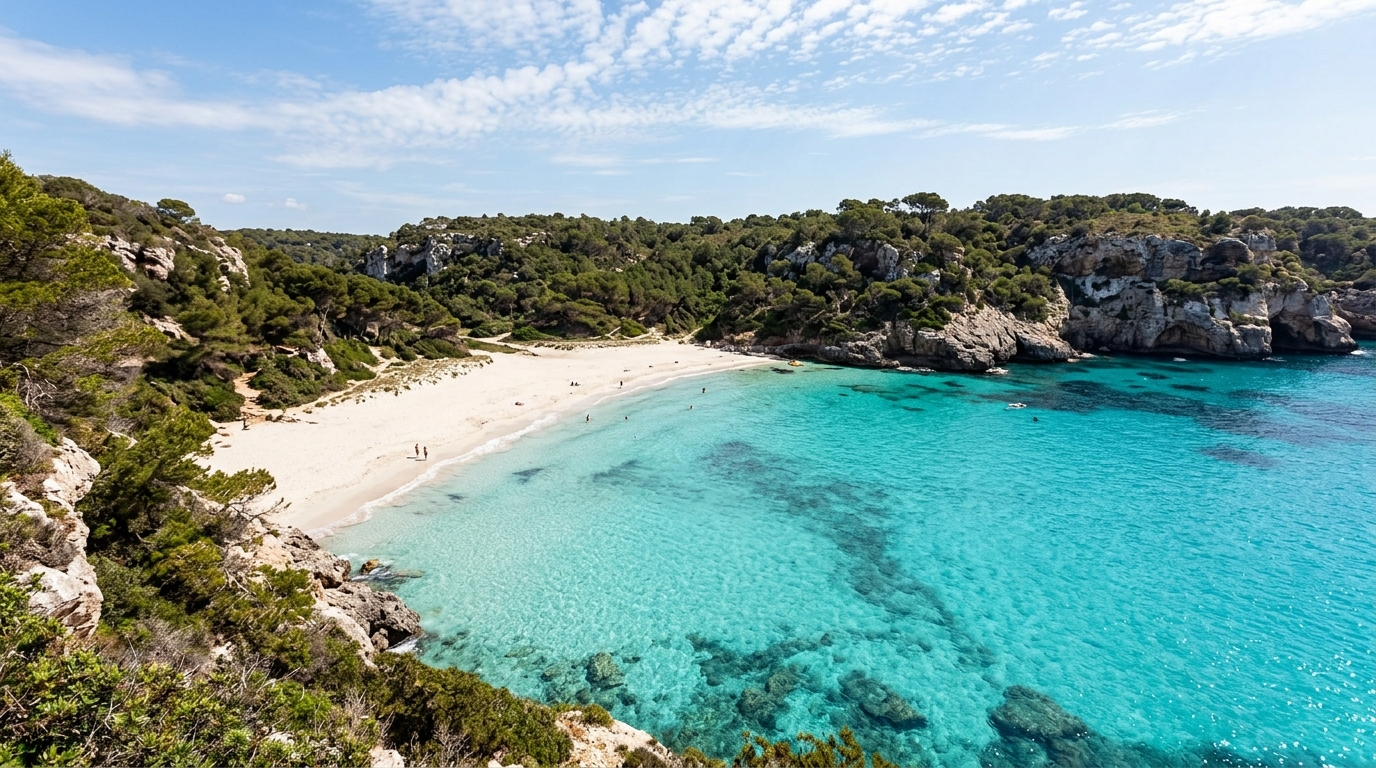
While the northern coast of Menorca features dramatic red clay cliffs, the southern coastline is composed of sheer, bright-white calcarenite limestone gorges (known locally as barrancs). Cala Trebalúger is the crowning jewel of these southern inlets: a vast 175-meter-wide amphitheater of flour-soft white sand bisected by a tranquil, crystal-clear freshwater river that flows directly out of the forested interior.
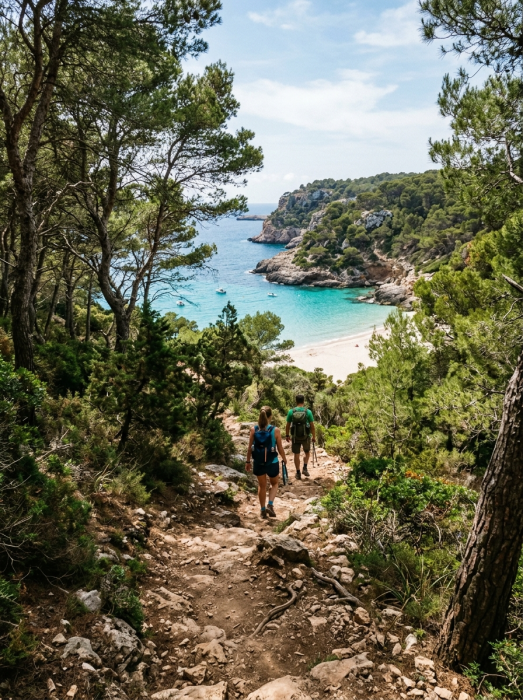
There are zero roads, beach bars (chiringuitos), or vehicle tracks leading anywhere within a 3-mile radius. Visitors arrive either via a 45-minute trek along the ancient Camí de Cavalls bridle path or by small private tender dropping anchor beyond the designated swimming buoys.
2. Trail Logistics & Navigation Protocols
To reach Trebalúger with minimum human contact, we recommend departing at daybreak (06:30 – 07:15 AM) from the Cala Galdana parking trailhead.
- Stage 1: Follow the coastal trail east from Cala Galdana over the pine plateau to Cala Mitjana (approx. 20 minutes).
- Stage 2: At the eastern ridge of Mitjaneta, take the narrow rocky path climbing up through the wild mastic and holm oak trees. Look for the ancient wooden waymarkers bearing the numeral GR-223 / Stage 14.
- Stage 3: Descend the winding limestone staircase carved into the eastern gorge directly onto the sands of Trebalúger (approx. 25 minutes from Mitjana).
3. Secret Continuation: Cala Fustam & Cala Escorxada
If you wish to push deeper into absolute isolation, cross the freshwater river at the back of Trebalúger (depth rarely exceeds knee-height during summer) and climb the opposing bluff. A further 40-minute hike along the cliff edge leads to Cala Fustam, followed by Cala Escorxada. These two sister coves are so remote that you will frequently find them completely devoid of other human presence, even in peak July and August weeks.
4. Packing & Environmental Stewardship
Menorca has been a strictly designated UNESCO Biosphere Reserve since 1993. All visitors must carry out 100% of waste, refrain from utilizing chemical sunscreens that damage Posidonia oceanica seagrass meadows, and carry a minimum of 2.5 liters of drinking water per person, as there are zero freshwater concessions on-site.